|
4. Applications of "DENKA
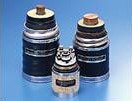
BLACK" Since its production was started in 1942, "DENKA BLACK" has played an important role as a rubber reinforcing agent. From around 1948, acetylene black began to be used in dry batteries, and by 1950, acetylene black was widely used as an alternative to natural black graphite. Accordingly, the application of "DENKA BLACK" was also rapidly shifted from its use as a rubber reinforcing agent to use in dry batteries. Recently, by taking advantage of its excellent high purity and electric/thermal conductivity, "DENKA BLACK", led by the granule product category, is being widely used for semiconducting layer materials for extra high-voltage cables, keyboards, rolls, belts and other conductive rubber, AV tapes, IC packing, and IC trays. In addition, application of "DENKA BLACK" has been newly developed for various primary and secondary batteries, and further applications in various areas are possible. |
|
|
(1)
|
Dry Batteries Taking advantage of its high liquid-absorption and conductive properties, "DENKA BLACK" is used to retain electrolyte solution in many dry batteries and to conduct the generated electricity to the electrodes. "DENKA BLACK" [Powder Products] and [Press Products], with their high liquid absorption, are suitable for dry batteries. |
|
|
|
|
(2) |
Rubber Reinforcing Agents As for the reinforceability of "DENKA BLACK", it has such characteristics as (1) high hardness, (2) large heat generation properties, (3) high elasticity, and other average characteristics overall. Therefore, "DENKA BLACK" is used for printing rollers. In addition to reinforcement capability, "DENKA BLACK" has good heat dispersion and cut resistance, which is very suitable for tire bladders and racing tires exposed to severe use conditions and intense heat generation. |
|
|
|
|
(3) |
Conductive Material Mixing
Agents Among carbon blacks, the acetylene black "DENKA BLACK" in particular gives high conductivity. Compared with metal powder, "DENKA BLACK" has the following excellent properties:
|
| Application of Conductive Materials | |
| 1 |
Cables Conductive rubber is used on the semiconducting layer between a conductor and an insulator. Also, "DENKA BLACK" is very suitable for noise insulation material for communications cables, etc. |
| 2 |
Belts "DENKA BLACK" is used in belts used in plants and mines because belts are required to be electrically conductive in order to prevent electrostatic accidents. |
| 3 |
Hoses Electric discharge and fire are prevented by eliminating potential differences caused by static electricity which is generated between a hose, fluid, and the ground when fluid flows through the hose. |
| 4 |
Floor "DENKA BLACK" prevents electrostatic discharge on operating room floors in hospitals. |
| 5 |
Shoes Electrostatic sparks which don't cause problems in our daily life become a serious problem at explosives factories and at hospitals. Conductive shoes are effective measures for preventing such problems. |
| 6 |
Rollers Rollers are electrically charged due to continuous contact/ separation of objects, which may cause explosions and a deterioration workability due to inhalation. Mixing "DENKA BLACK" into rubber rollers gives them conductivity, and makes it possible for them to be used copiers and printing machines. |
| 7 |
Heaters When conductive rubber or conductive plastics are charged with electricity, they heat up like nichrome wires. Compared with metal, the heating of "DENKA BLACK" is even, light, and has the characteristics of rubber and plastics with excellent flexibility, which makes molding and processing easy. De-icers for propellers, heaters, and various other applications are being developed. |
| 8 |
Surface Heating Elements By giving conductivity to rubber and plastics with "DENKA BLACK" and charging them with electricity, the whole surface becomes a heating element. Such elements are used for floor heating and various road heating devices. |
| 9 |
Conductive Paints/Adhesives "DENKA BLACK" is used for the processing of various conductive materials, and for painting and adhesion of products which require electric and thermal conductivity. |
| 10 |
Materials for Electronic Parts Since "DENKA BLACK" uses acetylene gas as a raw material, it is a high purity carbon black, making it very good for electronic materials. As for the case of making silicon rubber conductive, "DENKA BLACK" shows good conductivity and fewer curing obstructions. |
| 11 |
Others When "DENKA BLACK" is mixed into lubricating oil agents, their strength is increased, and their heat stability during high-temperature use greatly improves. "DENKA BLACK" is also usable in the metal industry for processes that require pure carbon, and as an agent for applying high-purity carbon in experiments and research. In the carbon industry, conductivity adjustments are possible by mixing "DENKA BLACK" into various carbon materials. |
|
|
|